CHRONOS
World History Atlas
Founding Explorer Edition
The Silk Road Interactive Map
130 BCE – 1450 CE · Ancient Trade Network · East meets West
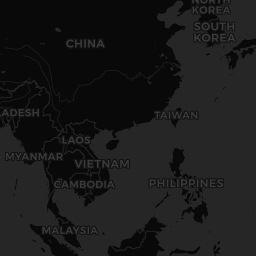
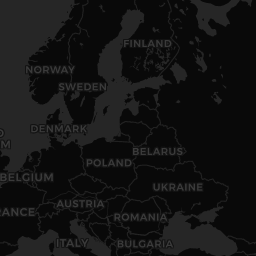
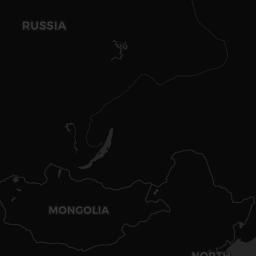




Explore the full interactive atlas in the app

The Silk Road: World's First Global Trade Network
For over 1,500 years, a web of trade routes stretching 4,000 miles connected China to Rome, linking civilizations that had never otherwise met. The Silk Road was not a single road but an ever-shifting network of overland paths and sea lanes along which merchants, monks, diplomats, and armies carried not just silk and spices, but ideas, religions, technologies, and diseases that permanently transformed every culture they touched.
It carried Buddhism from India to China and Japan, Islam from Arabia to Central Asia and beyond, paper-making from China to the Islamic world and then Europe, and the Black Death from Central Asia to every corner of Eurasia. No single event, road, or empire — the Silk Road was a living system, as complex and interconnected as the global economy it foreshadowed.
Timeline of the Silk Road
206 BCE – 220 CE
🏯 Han Dynasty Origins
Emperor Wu of Han sent Zhang Qian westward in 139 BCE to forge alliances against the Xiongnu nomads. Instead, Zhang Qian discovered the rich civilizations of Central Asia. The Han dynasty established regular diplomatic and trade missions west — the Silk Road was born. Chinese silk reached Rome, where it was so prized that the Roman Senate repeatedly tried to ban it as a corrupting luxury.
600 – 900 CE
🌙 Tang Dynasty Golden Age
The Tang dynasty presided over arguably the Silk Road's greatest era. Chang'an became the world's most cosmopolitan city, hosting merchants, monks, and diplomats from Central Asia, Persia, Arabia, Japan, and Korea. Over 100,000 foreigners lived in the city. Islam, Buddhism, Zoroastrianism, and Nestorian Christianity all had places of worship in the capital. Chinese innovations — paper, printing, gunpowder — began their slow spread westward.
750 – 1258 CE
⭐ Islamic Golden Age
The Abbasid Caliphate based in Baghdad created a vast interconnected world from Spain to Central Asia. Arabic became the lingua franca of trade and scholarship. The House of Wisdom in Baghdad synthesized Greek, Indian, and Persian knowledge. Algebra, algorithms (named for al-Khwarizmi), and the decimal number system traveled west. Muslim merchants formed reliable networks from Morocco to Malaysia, ensuring Silk Road trade even during political upheaval.
1206 – 1368 CE
🦅 Mongol Pax Mongolica
Genghis Khan and his descendants created the largest contiguous land empire in history, uniting almost the entire Silk Road under a single political authority. Though the Mongol conquests were catastrophic — Merv and Baghdad were destroyed — Pax Mongolica that followed enabled the safest long-distance travel in history. Marco Polo made his journey during this era. Plague also traveled these routes: the Black Death reached Europe via Mongol trade networks in 1347.
1453 – 1600 CE
⛵ Decline & Maritime Age
The fall of Constantinople to the Ottomans in 1453 disrupted traditional trade routes. Portuguese navigator Vasco da Gama rounded Africa to reach India in 1498, offering a cheaper maritime alternative. Columbus sought a western route to Asia in 1492. By 1600, the great overland Silk Road caravans were in decline — but the knowledge, religions, and crops they had spread had already permanently transformed every civilization on earth.
What Traveled the Silk Road?
🧵 Silk
China's most jealously guarded secret. Smuggling silkworm eggs was punishable by death. Silk was used as currency, diplomatic tribute, and armor in addition to luxury fabric.
📄 Paper & Printing
Chinese paper-making reached the Islamic world via Samarkand after 751 CE, then Europe by the 12th century. Without the Silk Road, Gutenberg's printing press might have been delayed by centuries.
💥 Gunpowder
Invented by Chinese Taoist alchemists seeking immortality, gunpowder reached the Islamic world by the 10th century and Europe by the 13th — transforming warfare and ending medieval feudalism.
🧭 Mathematics
Indian scholars invented zero and decimal notation. Arab mathematicians transmitted it west. Without the Silk Road, there would be no algebra, no calculus, no modern science.
☸️ Buddhism
Buddhism spread from India to China, Korea, and Japan primarily via Silk Road merchants and monks. The cave temples at Dunhuang document 1,000 years of this spiritual migration in paint.
☪️ Islam
After the 7th century, Islamic merchants, scholars, and missionaries spread the new faith from Arabia to Central Asia, China, India, and East Africa — often following established trade networks.
🌿 Spices & Medicine
Black pepper, cinnamon, cloves, and nutmeg were as valuable as precious metals. Arab and Indian pharmacological knowledge traveled west, preserving and extending Greek medical traditions.
🐴 Horses
China desperately desired the 'blood-sweating heavenly horses' of Ferghana (modern Uzbekistan). The Han-Xiongnu wars were partly fought to control horse-breeding territories.
Legendary Travelers of the Silk Road
Marco Polo
Venetian Merchant, 1271–1295
Traveled from Venice to Kublai Khan's court in China and back, spending 17 years in Asia. His book 'The Travels of Marco Polo' introduced Europeans to the wonders of China, inspiring Columbus and a generation of explorers.
Zhang Qian
Han Dynasty Envoy, 139 BCE
Emperor Wu sent him westward to forge alliances. Captured by the Xiongnu for a decade, he escaped and finally reached Bactria. His reports opened the Silk Road — he is called 'the Father of the Silk Road.'
Xuanzang
Tang Dynasty Buddhist Monk, 629 CE
Traveled from Chang'an to India against imperial orders to collect Buddhist scriptures. His 17-year journey covered 25,000 miles through Central Asia and the Himalayan passes. He inspired the classic novel 'Journey to the West.'
Ibn Battuta
Arab Scholar, 1325–1354
From Morocco, he traveled more than 75,000 miles across the entire Islamic world, into sub-Saharan Africa, Central Asia, and China. His memoirs provide the most comprehensive medieval account of Silk Road civilization.
Rabban Sauma
Nestorian Christian Monk, 1287
A Chinese-born Christian monk who traveled from Beijing to Rome as the Mongol Empire's ambassador, meeting the Pope and European kings. His journey — the reverse of Marco Polo's — is almost entirely forgotten today.
Questions About the Silk Road
Explore the Full Interactive Atlas
Discover world history through immersive maps, animated routes, and conversations with the people who lived it.
Continue in Chronos
Why install the Chronos app?
This page is a starting point. The Chronos app adds the full experience — an interactive atlas, reconstructions, and conversations with the people who lived this history.
Interactive Historical Atlas
Explore a live, zoomable world map with real historical sites pinned to their exact locations.
Nearby Historical Sites
Discover the history around you — temples, monuments, and ancient places near your location.
Historical Reconstructions
See how places looked in their time through grounded, cinematic reconstructions.
Immersive Experiences
Step inside the stories, sounds, and atmosphere of moments that shaped the world.
Dialogues with Historical Characters
Talk to the people who were there — rulers, explorers, and thinkers from across history.
Historical Routes
Follow trade roads, conquests, and voyages along their real paths across the map.
Practical Travel Information
Plan your visit with the details you need to reach and explore each site.
Favorites
Save places and build your own map through time.
New Content Added Regularly
Fresh historical events, maps, and stories are added on an ongoing basis.
Explore Related Historical Maps
Continue your journey through history. Discover connected civilizations, empires, and pivotal moments.
Mongol Empire
The largest contiguous land empire in history
Ottoman Empire
Bridge between East and West
Ancient Egypt
Cradle of civilization along the Nile
Age of Exploration
New trade routes across the oceans