
CHRONOS
World History Atlas
Founding Explorer Edition
Mongol Empire Interactive Map
1206–1368 CE · Largest Land Empire · Genghis Khan to Kublai Khan
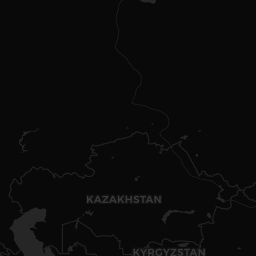
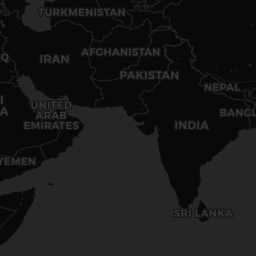
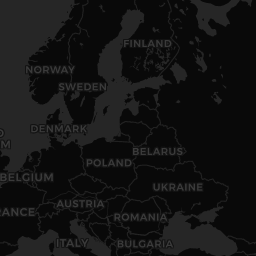
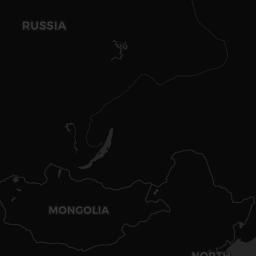
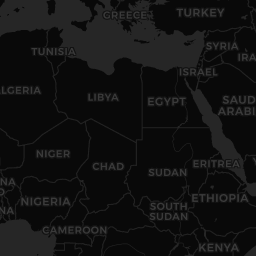
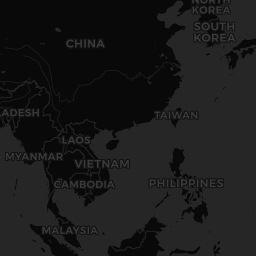

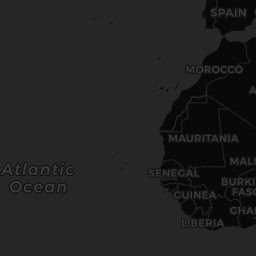

Explore the full interactive atlas in the app

The Mongol Empire: History's Greatest Conquest
In less than a century, a confederation of nomadic steppe tribes from the grasslands of modern Mongolia built the largest contiguous land empire in history — stretching from the Pacific Ocean to the Danube River, from the Arctic tundra to the South China Sea. At its peak, the Mongol Empire covered 24 million square kilometers, ruling over 100 million people across dozens of civilizations.
The Mongols were simultaneously the most destructive and most connective force in medieval history. Their conquests killed tens of millions and erased cities that had stood for millennia. Yet the empire they built created the world's first true global trade system — connecting China, Persia, Russia, and Europe in ways that accelerated the transmission of knowledge, technology, and ultimately the conditions for the Renaissance.
Six Phases of Conquest
1206
Mongolia United
All steppe tribes unified under Genghis Khan
1215
North China Falls
Jin Dynasty capital (Beijing) sacked
1220
Central Asia
Khwarezmian Empire obliterated
1240
Russia Conquered
Kievan Rus destroyed; Golden Horde established
1258
Baghdad Sacked
Abbasid Caliphate destroyed; Islamic Golden Age ends
1279
All China
Song Dynasty falls; largest empire in history achieved
Timeline of the Mongol Empire
1162 – 1206 CE
🦅 Rise of Temüjin
Born in poverty near the Onon River, Temüjin spent decades building alliances and crushing rivals. He survived kidnapping, enslavement, and the theft of his wife. Through tactical brilliance and force of personality, he united the Mongol tribes — something no one had done before. In 1206, a great assembly of all Mongol clans proclaimed him Genghis Khan: 'Universal Ruler.' He then created the most meritocratic army in the world: promotion by ability, not bloodline.
1211 – 1234 CE
🔥 China Campaigns
Genghis Khan launched campaigns against the Jin Dynasty of northern China. His cavalry armies — masters of feigned retreat, envelopment, and psychological terror — breached the Great Wall and sacked Zhongdu (Beijing) in 1215. Rather than destroying Chinese civilization, the Mongols absorbed Chinese engineers, siege specialists, and administrators. Kublai Khan would later complete the conquest with the fall of the Song Dynasty in 1279, ruling China as the Yuan Dynasty.
1219 – 1221 CE
💀 Khwarezmian Destruction
Shah Muhammad of the Khwarezmian Empire made the greatest strategic blunder of the medieval era: he executed Genghis Khan's entire trade embassy. This invited one of history's most devastating responses. Mongol armies swept through Central Asia with organized ferocity: Samarkand, Merv, Nishapur, and Herat were sacked. Central Asia lost an estimated 15-30 million people — half its population. Cities that had thrived for millennia were reduced to dust and bones.
1237 – 1242 CE
❄️ Conquest of Russia & Europe
Batu Khan and general Subutai led the western campaign — arguably the finest strategic operation in medieval military history. Russian princes were defeated in detail; Kiev fell in 1240. Poland and Hungary were crushed in simultaneous battles in April 1241. All of Europe trembled. Then Ögedei Khan died in Mongolia, and the Mongol princes rode east for the succession kurultai. Europe was saved not by knights, castles, or faith — but by a death 4,000 miles away.
1258 CE
📚 Sack of Baghdad
Hulagu Khan's destruction of Baghdad in 1258 ended the Abbasid Caliphate and what many historians consider the Islamic Golden Age. The last Caliph was killed; the city's legendary libraries reportedly burned or dumped in the Tigris. A civilization that had preserved and extended human knowledge for 500 years was extinguished in days. The Mongols were finally stopped at the Battle of Ain Jalut (1260) in Palestine by the Mamluks — the first time a Mongol army was decisively defeated in the field.
1250 – 1350 CE
🕊️ Pax Mongolica
After the horror of conquest came an extraordinary century of stability. The Pax Mongolica — enforced by Mongol power across 24 million square kilometers — enabled the safest and most connected Eurasia in history. A merchant could travel from China to France with a single Mongol safe-conduct pass (gerege). The yam postal relay system delivered messages 200 miles per day. Marco Polo made his journey. Plague also traveled these routes: the Black Death killed 30-60% of Europe's population after 1347.
1260 – 1368 CE
🏚️ Division & Decline
After 1260, the empire fractured into four great khanates: the Yuan (China), Ilkhanate (Persia), Golden Horde (Russia), and Chagatai Khanate (Central Asia). They often warred with each other. The Black Death, traveling Mongol trade routes, devastated populations across Eurasia in the 1340s. The Yuan Dynasty fell to the Ming Dynasty in 1368. The last Golden Horde remnants were absorbed by Russia by 1502. The greatest empire in history quietly dissolved — but the world it had connected would never be the same.
Why the Mongols Were Unstoppable
🐎 Horse Archers
Mongol cavalry could shoot accurately at full gallop in any direction, including backward (the "Parthian shot"). Every warrior had 3–5 horses, giving unmatched strategic mobility. Armies could cover 100 miles per day — impossible for medieval European or Islamic armies.
🎭 Psychological Warfare
The Mongols weaponized fear with extraordinary skill. Cities that surrendered were spared; those that resisted were annihilated. Word spread ahead of the armies. By the time Mongol scouts appeared, many cities surrendered without a fight, paralyzed by stories of what resistance meant.
🏰 Siege Engineering
Mongols absorbed the world's best engineers after each conquest — Chinese, Persian, and Muslim specialists. They deployed trebuchets, flamethrowers, and gunpowder weapons. They once diverted a river to flood Urgench. No fortification was truly safe.
🧠 Strategic Intelligence
Mongol campaigns were meticulously planned through intelligence networks months or years in advance. Spies mapped enemy terrain and political divisions. General Subutai's campaigns were coordinated across fronts separated by thousands of miles — an organizational feat unmatched until the 20th century.
⚖️ Meritocracy
Unlike every contemporary army, Mongol promotion was based entirely on merit. A slave could rise to generalship; a nobleman who failed was demoted. Generals like Subutai (born a blacksmith's son) became history's greatest military minds. Women held real power in Mongol society — Genghis Khan's mother and wives were influential political figures.
🌐 Adaptive Empire
The Mongols had no fixed ideology to impose. They adopted local religions, languages, and administrative systems. Kublai Khan patronized Chinese art and scholarship. The Ilkhan rulers converted to Islam. This pragmatism enabled the empire to rule 100 million diverse subjects — and contributed to the remarkable Pax Mongolica.
Questions About the Mongol Empire
Explore the Full Interactive Atlas
Discover world history through immersive maps, animated routes, and conversations with the people who lived it.
Continue in Chronos
Why install the Chronos app?
This page is a starting point. The Chronos app adds the full experience — an interactive atlas, reconstructions, and conversations with the people who lived this history.
Interactive Historical Atlas
Explore a live, zoomable world map with real historical sites pinned to their exact locations.
Nearby Historical Sites
Discover the history around you — temples, monuments, and ancient places near your location.
Historical Reconstructions
See how places looked in their time through grounded, cinematic reconstructions.
Immersive Experiences
Step inside the stories, sounds, and atmosphere of moments that shaped the world.
Dialogues with Historical Characters
Talk to the people who were there — rulers, explorers, and thinkers from across history.
Historical Routes
Follow trade roads, conquests, and voyages along their real paths across the map.
Practical Travel Information
Plan your visit with the details you need to reach and explore each site.
Favorites
Save places and build your own map through time.
New Content Added Regularly
Fresh historical events, maps, and stories are added on an ongoing basis.
Explore Related Historical Maps
Continue your journey through history. Discover connected civilizations, empires, and pivotal moments.
Silk Road
Trade routes protected and expanded by Mongols
Ottoman Empire
Successor empire in the Middle East
Renaissance
How Mongol trade sparked European rebirth
Ancient Civilizations
Early empires and trade networks